
A 11,000-YEAR-OLD TRADITION
Earth Building
Earth Building is the practice of building using unfired earth material. Earth is used to construct walls, floors, roofs and even furniture, fireplaces and ovens. It is a building technology with an 11,000-year-old history and tradition, which is utilised worldwide. Today it is estimated that between one third to one half of the world’s population are housed in earth homes.
The common feature in all earth building techniques is that the earth material is subsoil that is composed of clay, silt, and sand where clay is the binder or cementing ingredient and that the drying process is through the evaporative effect of sun drying.
The methods and techniques used are as varied as the people of the earth, the resources available to them and the climates in which they are used.
There are at least 12 methods of earth building used and these can be further divided into a total of at least 18 techniques.
Perhaps the best known methods are:
Intro to Techniques
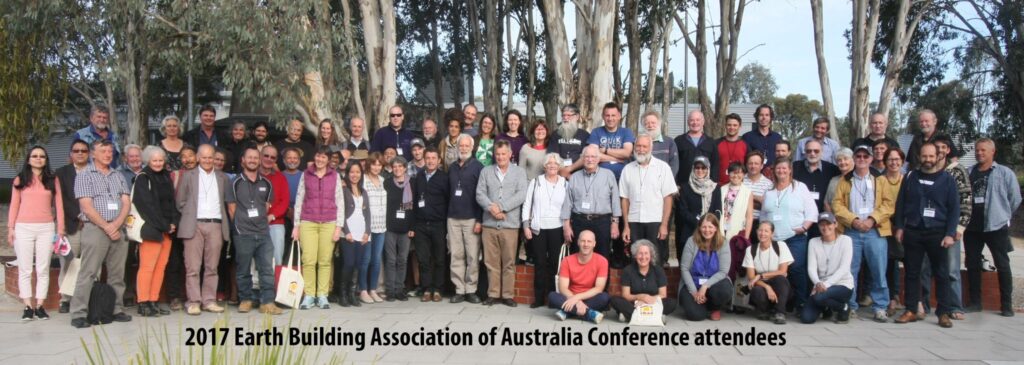
The Earth Building Association of Australia (EBAA) is an organisation formed to promote the use of Unfired Earth as a building medium throughout Australia.
EBAA is a broad based organisation which has members that include builders, specialist contractors, tradespeople and ownerbuilders, specialist manufacturers and suppliers, architects and designers, consultants, educators and students, with a common interest in the use of Unfired Earth.
The formation of EBAA commenced in 1990 at a gathering held in Maldon, Victoria. A subsequent meeting took place in Mildura, Victoria in 1991 which elected the first Committee of EBAA. Since then the primary focus of the Association has been communicating constructively with all levels of Government concerned with the regulation of Building practice in Australia as well as educating and informing our membership and the public.
Our association has a strong national focus and is the peak body for Earth Building practitioners, both private & commercial, in Australia. Membership is open to all with an interest in earth building.
Learn more about Earth Building
Appropriate, Renewable, Sustainable Technology
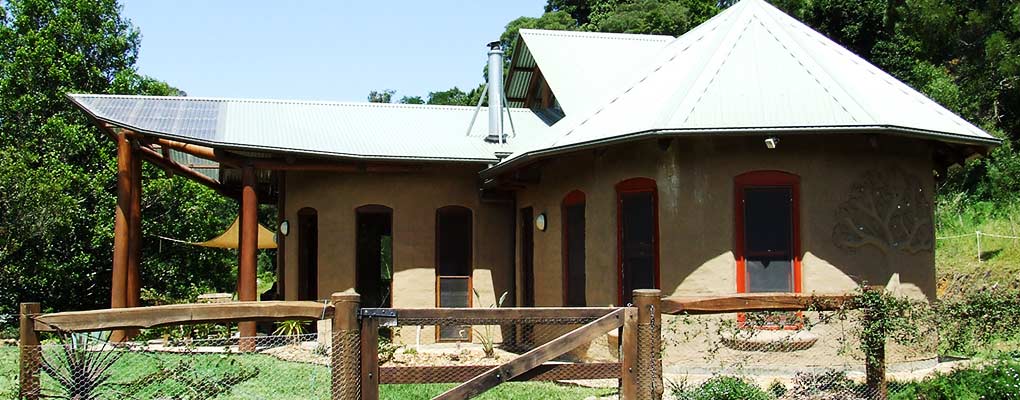
Earth building is an appropriate, renewable, sustainable technology. We believe it is exactly what the world needs today to provide safe, durable, comfortable and desirable homes. Those who have owned or lived in an earth home would know and appreciate this.
Earth building is appropriate technology because it is simple and available to everyone – poor or rich alike. The material is durable (100 – 400 yrs plus proven in Australia, Europe, England, Middle East) offering longevity rivalling modern western housing (25-50 yrs, Australia). It is adaptable, being used for footings, floors, walls and roofs utilising many techniques.
Green Building
Earth is possibly the ultimate Green Building material.
How do we meet the challenges of comfortable safe buildings whilst reducing the energy used in construction, heating and cooling of buildings, improve indoor air quality and longevity of buildings and reduce toxic waste to landfill?
It is a technology that is ancient yet still most relevant.
Build of earth for the Earth.
Earth Brick (Mudbrick/Adobe)
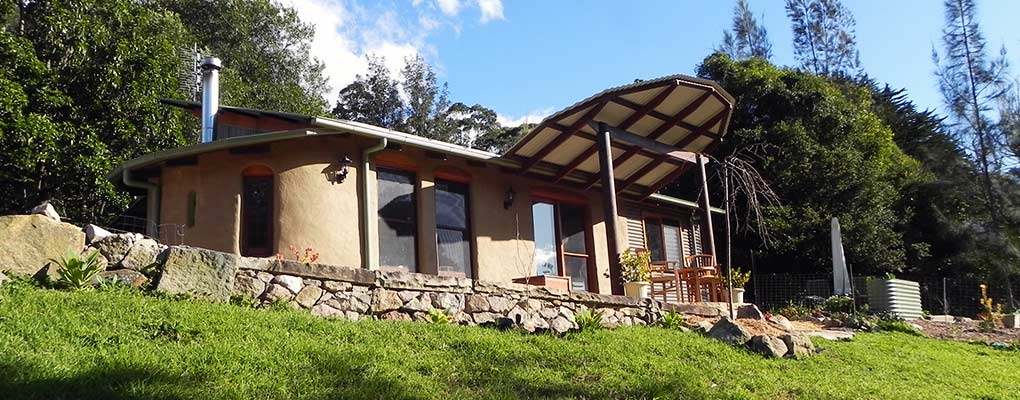
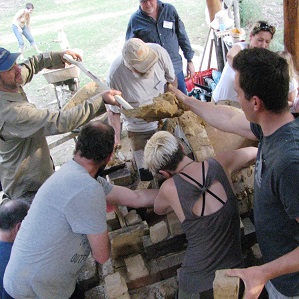
Mud brick is the most popular name used in Australia to describe bricks made from various compositions of soil and dried at air temperature in the brick production stage.No one really knows the earliest uses of mudbrick in the world but the oldest surviving bricks are 10,000 years old and mudbrick was one of the earliest building materials.
In Australia mudbrick was one of the many forms of earth building used by the early settlers and it is not unusual to find examples still in use which are over a hundred years old. The length of time some of these buildings have survived is remarkable considering the lack of good quality building practices that only came into general use in the middle of the last century.
Rammed Earth (Pise)
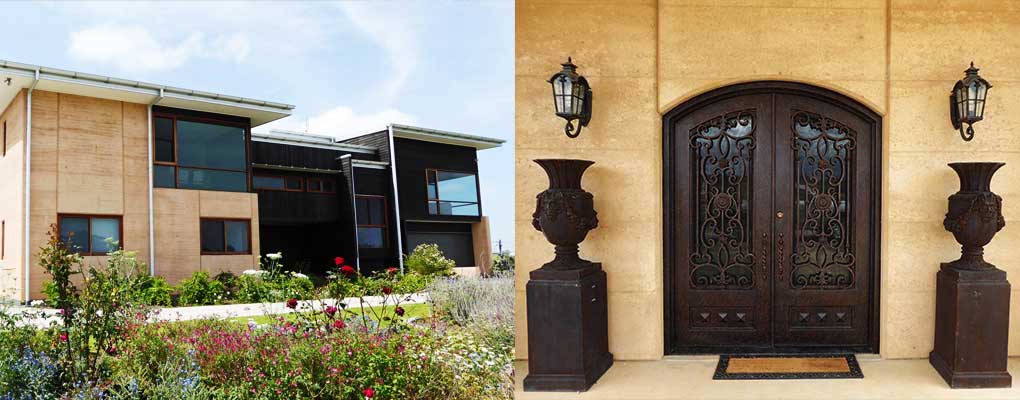
Rammed Earth, also known as Pise’, uses in-organic earth material that is only worked when damp or moist, with or without any stabilising additive. Utilizing formwork panels, the earth mix is then rammed (tamped) in-situ to construct the wall structure. It is a solid masonry wall which does not have, or need, any cavity. Rammed Earth walls in Australia are generally 300mm thick, are cement stabilised with 5% to 10% cement.
Rammed Earth has been used in most parts of the world for centuries for every imaginable type of building. Rammed Earth has been used in Australia from the earliest historical days of English settlement and is currently in widespread use throughout Australia.
Cob
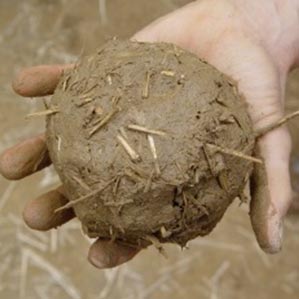
Cob is a natural building material used for constructing walls, it is a similar material to adobe mud brick. Cob walls are made from a mixture of mud, (sand and clays) and a fibrous organic matter with an acceptable tensile strength, like hay or straw, that is mixed together with water to create a mud pulp dough.
In recent times in Australia, cob has been growing in popularity, especially among the natural building and permaculture fraternity.
Pressed Earth Brick/Block
A Pressed Earth Block (CEB), also known as a Compressed Earth Block, is a building material made primarily from an appropriate mix of fairly dry inorganic subsoil, non-expansive clay, sand, and aggregate. Making compressed earth blocks requires dampening the earth and mechanically pressing at high pressure in a mould, and then setting side the produced bricks to dry naturally. If the blocks are stabilized with a chemical binder such as Portland cement, they are called Compressed Stabilized Earth Block (CSEB). Typically, a compression of around 3,000 psi (21 MPa) is applied to the mix to create the brick with comparable compressive strengths to that of concrete blocks.

Company
About Us
Terms & Conditions
Privacy Policy
Contact Us
Popular Categories
About Us
Terms & Conditions
Privacy Policy
Contact Us